


Why autonomous field maintenance is breaking through now
By VerdaMachina · Last updated 16 Sep 2026 · 2 min read
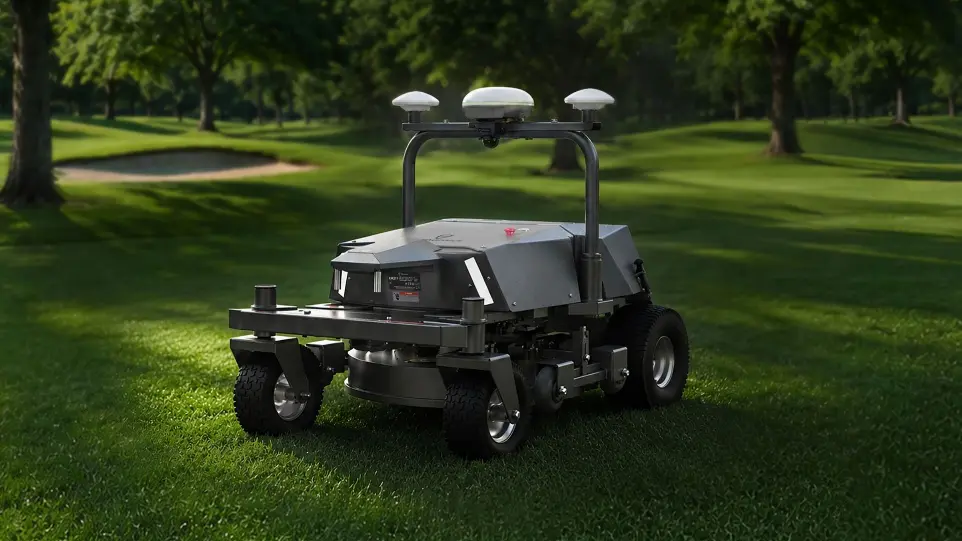
Robots for sports fields and green spaces were long a curiosity: interesting at a trade fair, but not for your own grounds. That is changing fast. Clubs, municipalities, schools and golf courses now use autonomous mowers and line marking robots as ordinary equipment. Four developments explain why this is happening now.
1. Hands are scarce
Grounds managers find it ever harder to recruit qualified staff, and many clubs run on volunteers who are not available every week either. Mowing and line marking come back every week, often early in the morning or at weekends. It is exactly that predictable, repetitive work that lends itself to automation. The team gains time for what really takes craftsmanship: turf repair, fertilising, irrigation and match preparation.
2. The technology has matured
The technology behind field robots has improved greatly in recent years. RTK-GPS provides centimetre precision, LiDAR and cameras recognise obstacles and people, and software plans routes across several pitches. Robots drive from pitch to pitch on their own, empty their hopper, resume where they stopped and report problems via an app. What used to be a prototype is now a machine with specifications, warranty and service.
3. The numbers add up
A robot requires an investment, but it works every day, without overtime or weekend supplements. With regular maintenance of several pitches, a robot often pays for itself within a few years, and leasing spreads the cost. How to calculate that for your own grounds is explained in ROI of a field robot.
4. Sustainability counts
Municipalities and clubs have climate targets, and maintenance with petrol or diesel machines fits them less and less. Field robots are electric and emit nothing on site. They are also quiet, which makes mowing early in the morning or in the evening possible without disturbing the neighbours.
What does that mean in practice?
The first step is rarely a complete fleet. Most organisations start with one task that takes a lot of time, such as mowing the training pitches or the weekly line marking. After one season it is clear how many hours that frees up and where a next robot delivers most.
- Sports clubs often automate mowing first with a robot such as the FJD Titan, and line marking after that.
- Golf courses choose a multi-task platform such as the FJD Rough Ranger, which mows, picks up balls and brushes dew.
- Municipalities start by marking several pitches with an FJD PaintMaster Pro or by mowing large grass areas.
Curious what a robot can mean for your grounds? Start with a one-week pilot or a demo on your own pitch.
Frequently asked questions
Does a robot replace the grounds team? +
No. A robot takes over repetitive work such as mowing, line marking and picking up balls. The team is still needed for planning, checks, repairs and all the work that requires expertise.
Is a field robot only worthwhile for large clubs? +
Not necessarily. A club with one or two pitches also spends many hours every week on mowing and line marking. Compact robots such as the FJD FRX or the FJD PaintMaster Mini are made for such grounds.
Machines in this article
More insights.
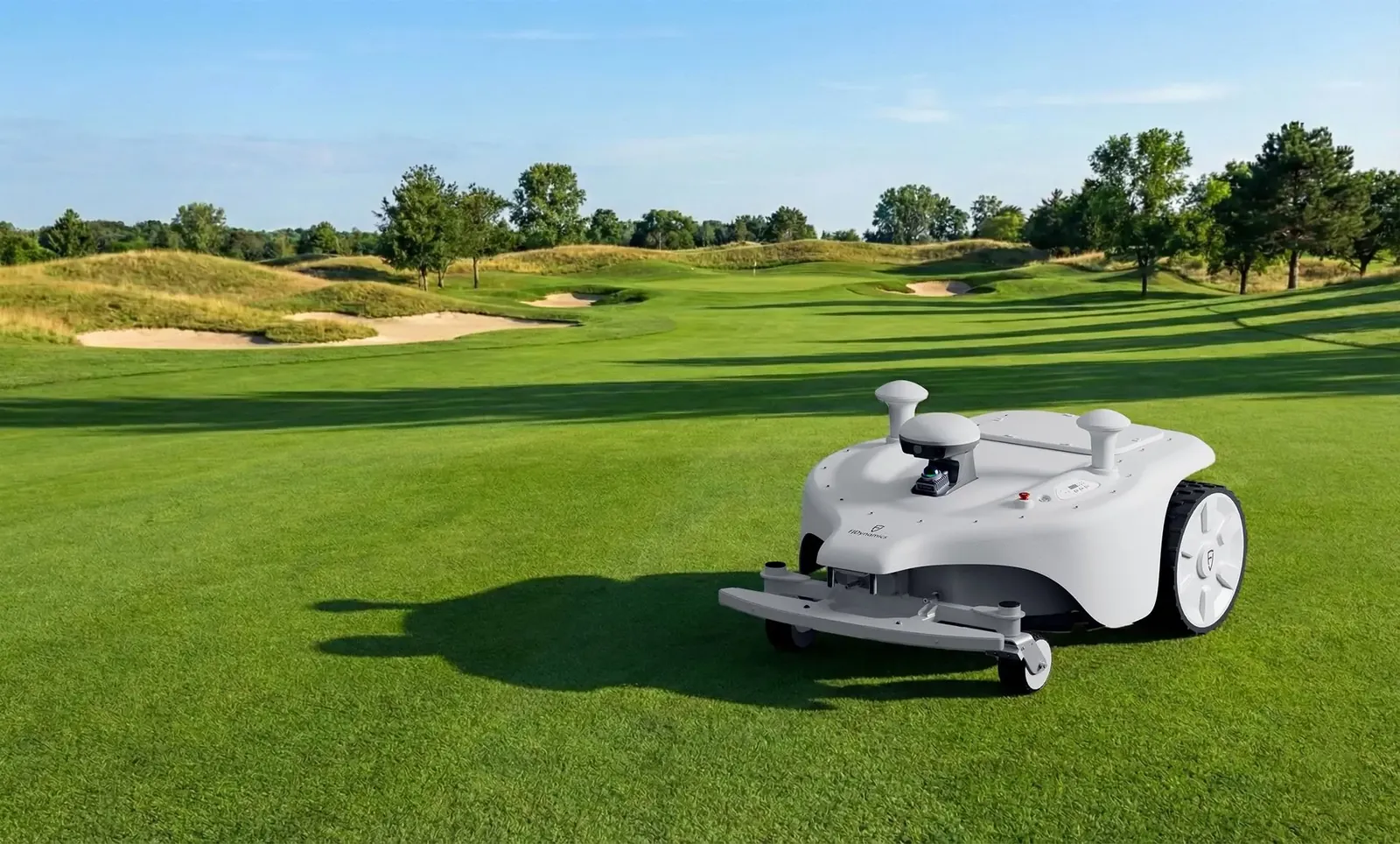
Robotic mower for a football pitch: 7 questions before you choose
Area, cutting height, collection, slopes and service: the questions that decide which robotic mower suits your football pitches.
Read article
Line marking robot for sports fields: how to choose the right one
How a line marking robot works, what it saves and how to choose between a light club robot, a robot for several pitches and stadium precision.
Read article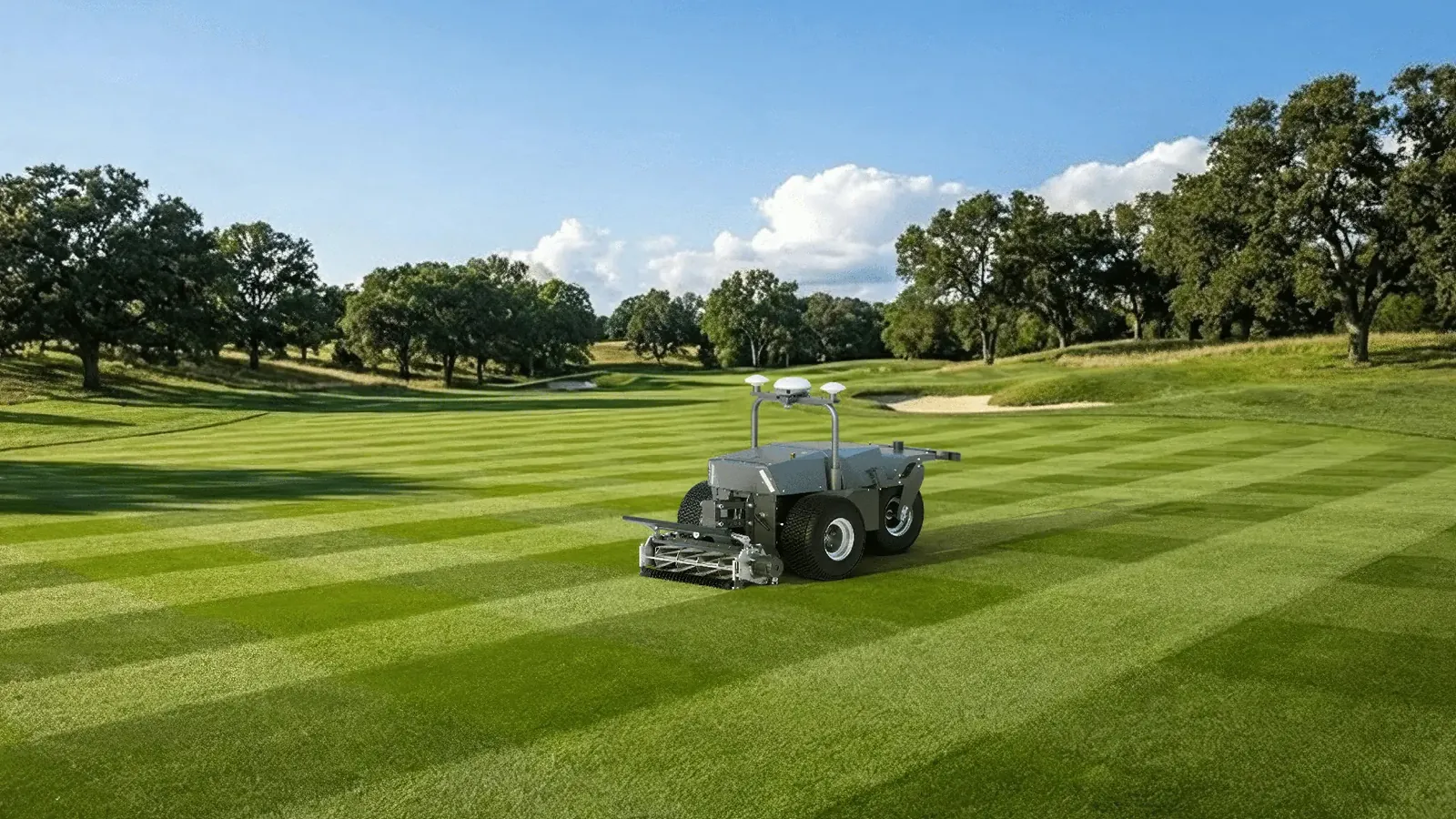
Cylinder mower or rotary mower: which robot suits your turf?
The difference between a cylinder mower and a rotary mower, and which robot to choose for greens, fairways, football pitches or municipal green spaces.
Read articleReady for smarter grounds?
Request a free field audit or demo.