


Robotic mower for a football pitch: 7 questions before you choose
By VerdaMachina · Last updated 16 Sep 2026 · 4 min read
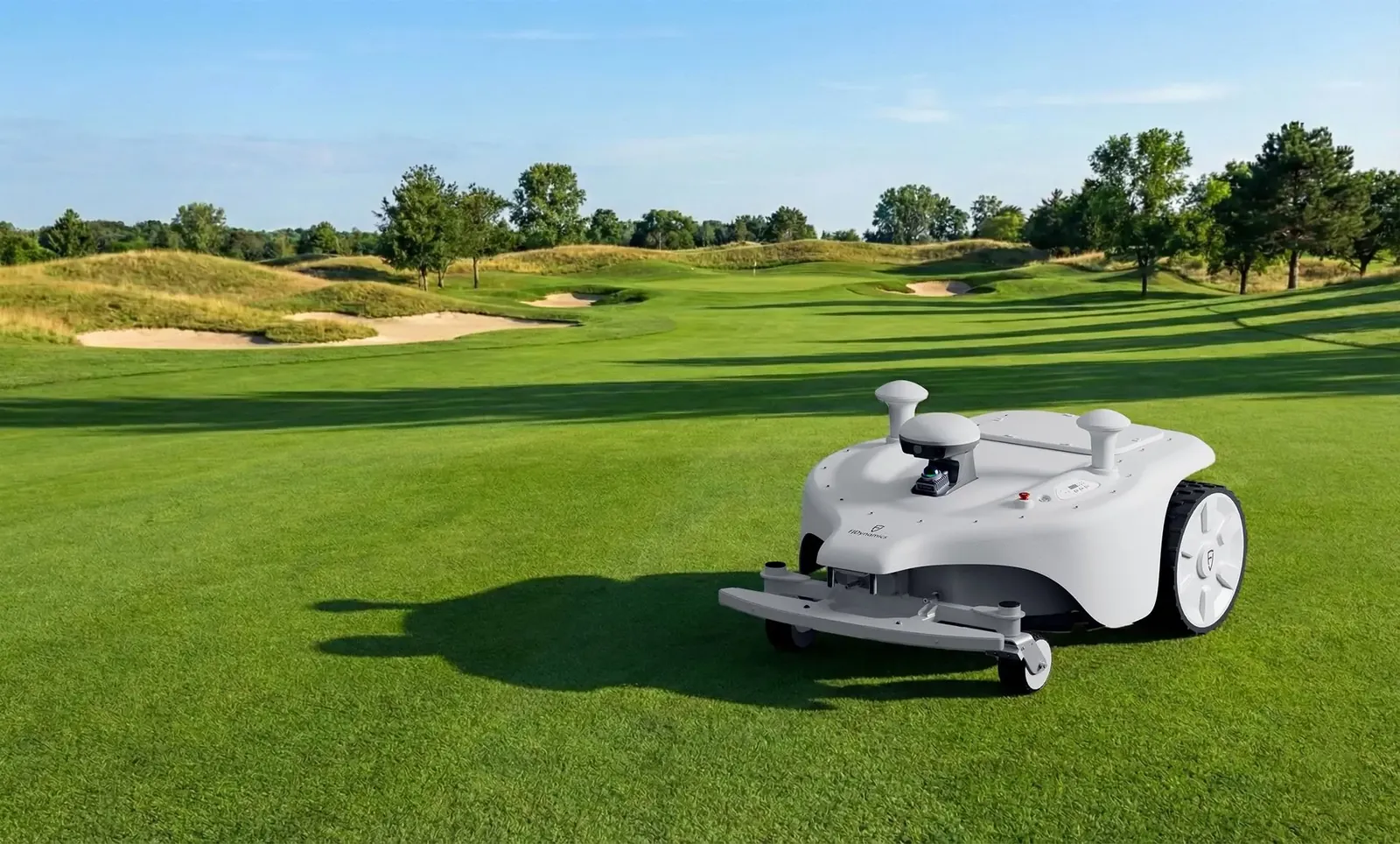
A robotic mower for a football pitch is not a large garden robot. A sports field needs a clean, even cut, regular mowing in the growing season and a machine that works safely on grounds where players, coaches and visitors walk around. The range has grown strongly in recent years, and the differences between models are large. These seven questions help you choose with purpose.
1. How much area must the robot cover per charge?
Start from the total grass area you want to automate, not from a single pitch. A standard football pitch with run-off areas is roughly 0.7 to 0.9 hectares. A club with a main pitch, two training pitches and a youth pitch quickly exceeds 3 hectares.
Capacity varies widely. The FJD FRX covers up to 8,000 m² per charge and suits a single pitch or a smaller site. The FJD Titan mows 730 mm wide with three cutting discs and covers up to 36,000 m² a day with automatic charging. The FJD Rough Ranger maintains up to 12,000 m² per charge and combines mowing with four other tasks. If you have several pitches, look at daily capacity and at how the robot moves from pitch to pitch on its own.
2. What cutting height do you play on?
Natural grass for football is usually kept between 25 and 35 mm, sometimes shorter for top pitches. Check that the robot reaches that height comfortably and how you set it. On some models this is done in the app, on others with an adjustment knob.
If you want a very short and very even cut, with the typical stripes of a stadium, you end up with a cylinder mower. The FJD RCM01 mows with an 8-blade cylinder from 7 to 44 mm. Read more about that difference in cylinder mower or rotary mower.
3. Should the clippings be collected?
If you leave clippings on the pitch, the robot works faster, but with long grass or wet weather clumps remain on the field. With the FJD GC01 Grass Collector Kit the Rough Ranger collects clippings, leaves and light debris across a width of 800 mm, with a collection volume of up to 150 litres, and unloads the collected material. For a pitch that must look neat on every match day, that makes a big difference.
4. How steep and how complex is the site?
Flat pitches are easy, but banks, verges and transitions to paving are not. Look at the maximum slope the manufacturer specifies and at how the robot recognises edges. The FJD Titan mows up to 20°, the FJD FRX up to 25° and the Rough Ranger up to 20°. On slopes, plan routes up and down rather than across.
5. How does the robot navigate, also under trees and next to stands?
Professional robots use RTK-GPS for centimetre precision, often combined with LiDAR or cameras. That combination matters next to tall stands, floodlight masts or rows of trees, where a GPS signal alone sometimes falls short. Also ask how a new pitch is surveyed: does someone have to drive the perimeter, or does the robot explore the site itself?
6. How safe is the robot on public grounds?
Children, parents and volunteers walk around a club ground. Look for obstacle detection that recognises people and objects, an emergency stop, blade locking and a stop when lifted or tilted. Schedule mowing outside training hours where possible. Because the robots are electric and quiet, that can also be early in the morning or in the evening.
7. Who handles installation, maintenance and support?
The machine is only part of the story. Someone has to survey the pitches, set up zones and routes, train the grounds team and be on site quickly in case of a fault. Choose a partner with service in your own language and parts close by. VerdaMachina supplies, installs and maintains from Belgium, with service plans for those who want certainty about response times.
Which robot suits which club?
- One pitch or a small site: FJD FRX.
- Several pitches, a municipality or a large complex: FJD Titan.
- Main pitch, golf course or stadium with high finishing standards: FJD RCM01 as a cylinder mower.
- Mowing and line marking with one machine: FJD Rough Ranger with the LM03 line marking kit, or the Titan with the optional line marking kit.
If in doubt, a demo on your own pitch is the quickest way to see the difference. Book a demo or first calculate your savings with the ROI calculator.
Frequently asked questions
Can a robotic mower maintain a full football pitch on its own? +
Yes, for the mowing. The robot mows autonomously to a schedule. Tasks such as scarifying, top dressing and repairing goalmouths remain work for the grounds team.
How long does it take to mow a football pitch? +
That depends on the cutting width and speed. According to the manufacturer the FJD Titan covers up to 36,000 m² a day with automatic charging, so a full pitch is usually mown in a single session.
Does a robotic mower work in the rain? +
Most professional robots are weatherproof, the FJD FRX is rated IPX5, for example. With very wet grass many groundskeepers still prefer to wait, because mowing is then less kind to the turf.
Can I test a robotic mower first? +
Yes. VerdaMachina brings the machine to your pitch for a demo, and if you want to test for longer you can request a one-week pilot.
Machines in this article
More insights.
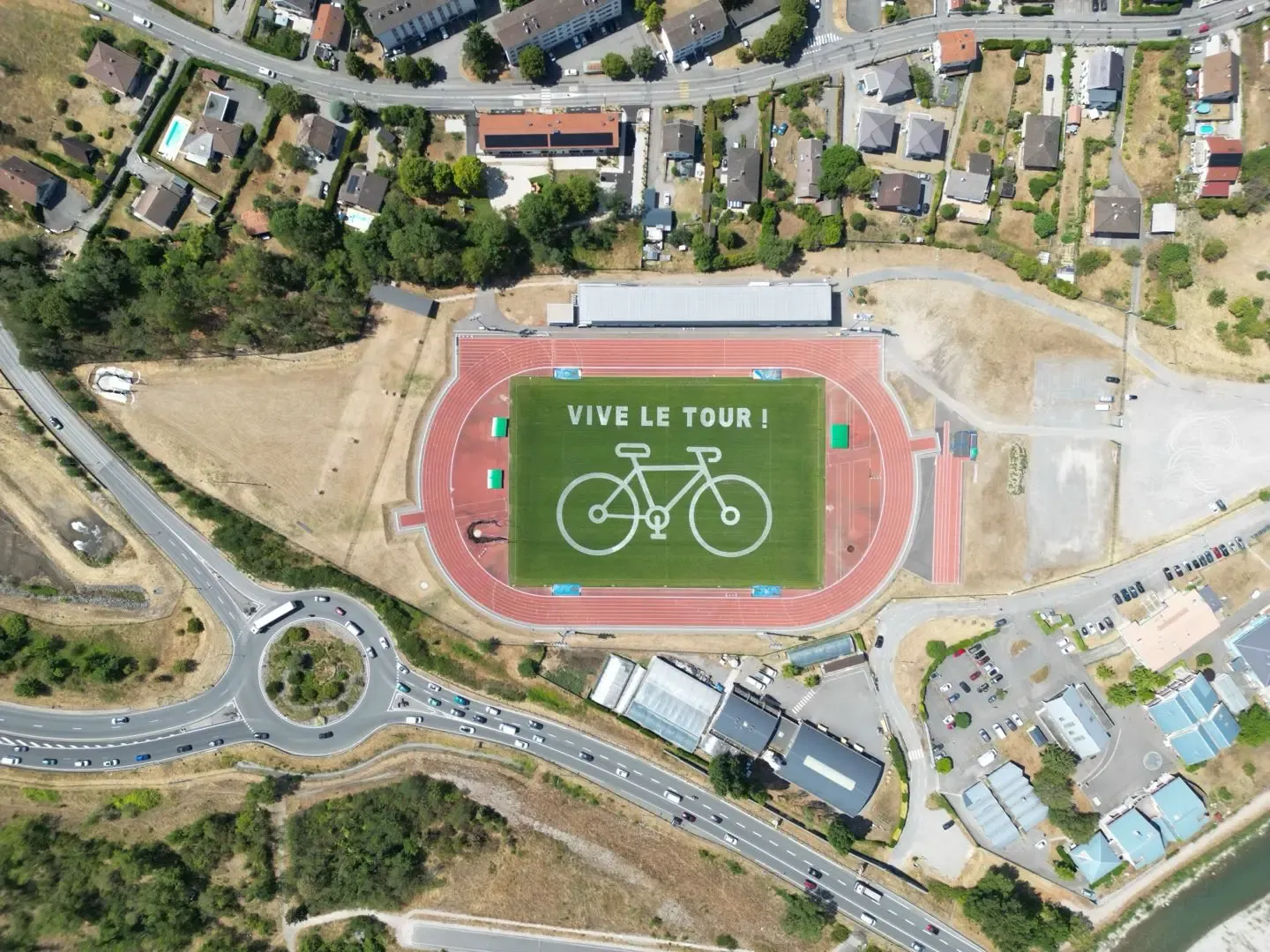
Line marking robot for sports fields: how to choose the right one
How a line marking robot works, what it saves and how to choose between a light club robot, a robot for several pitches and stadium precision.
Read article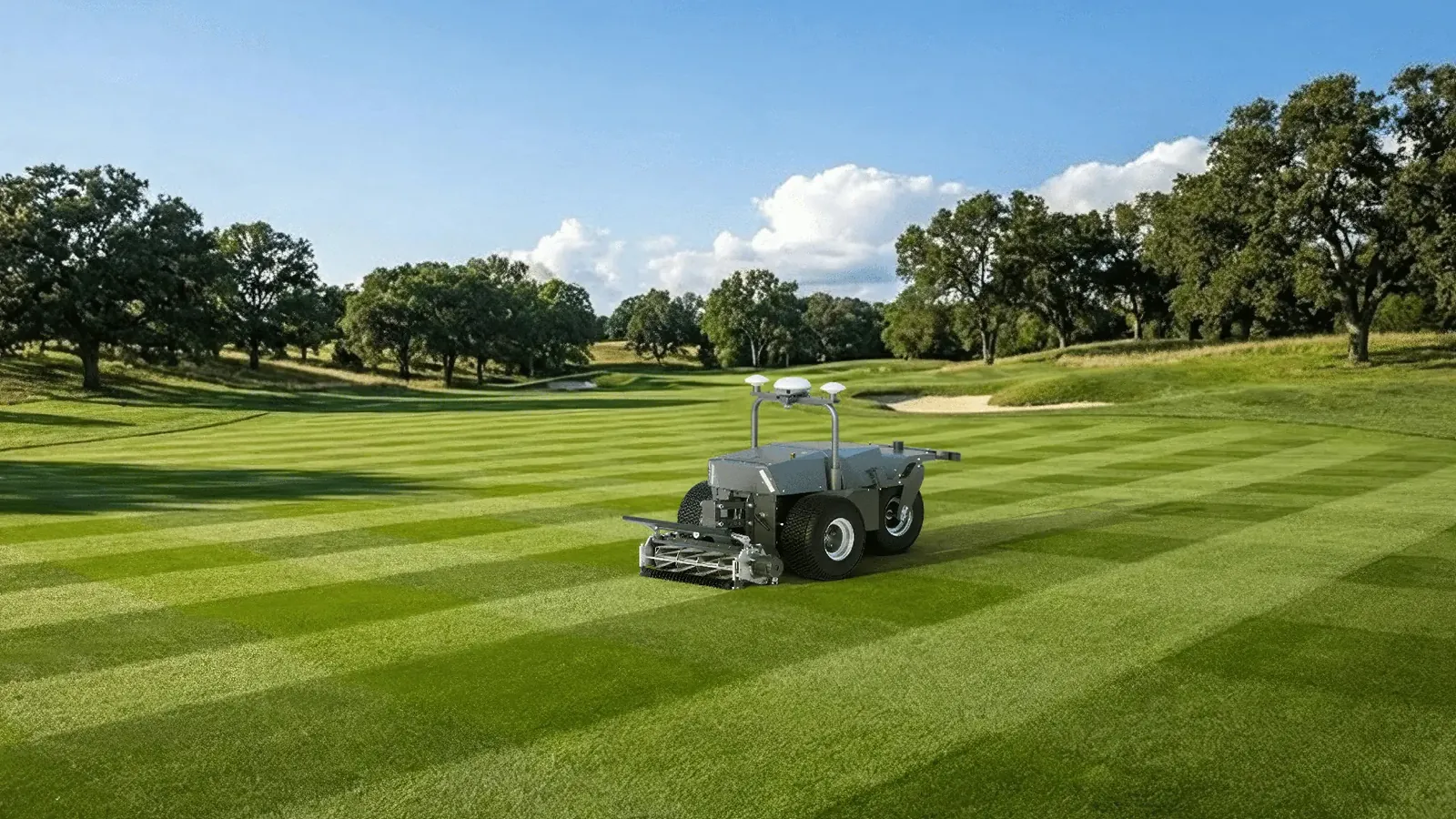
Cylinder mower or rotary mower: which robot suits your turf?
The difference between a cylinder mower and a rotary mower, and which robot to choose for greens, fairways, football pitches or municipal green spaces.
Read article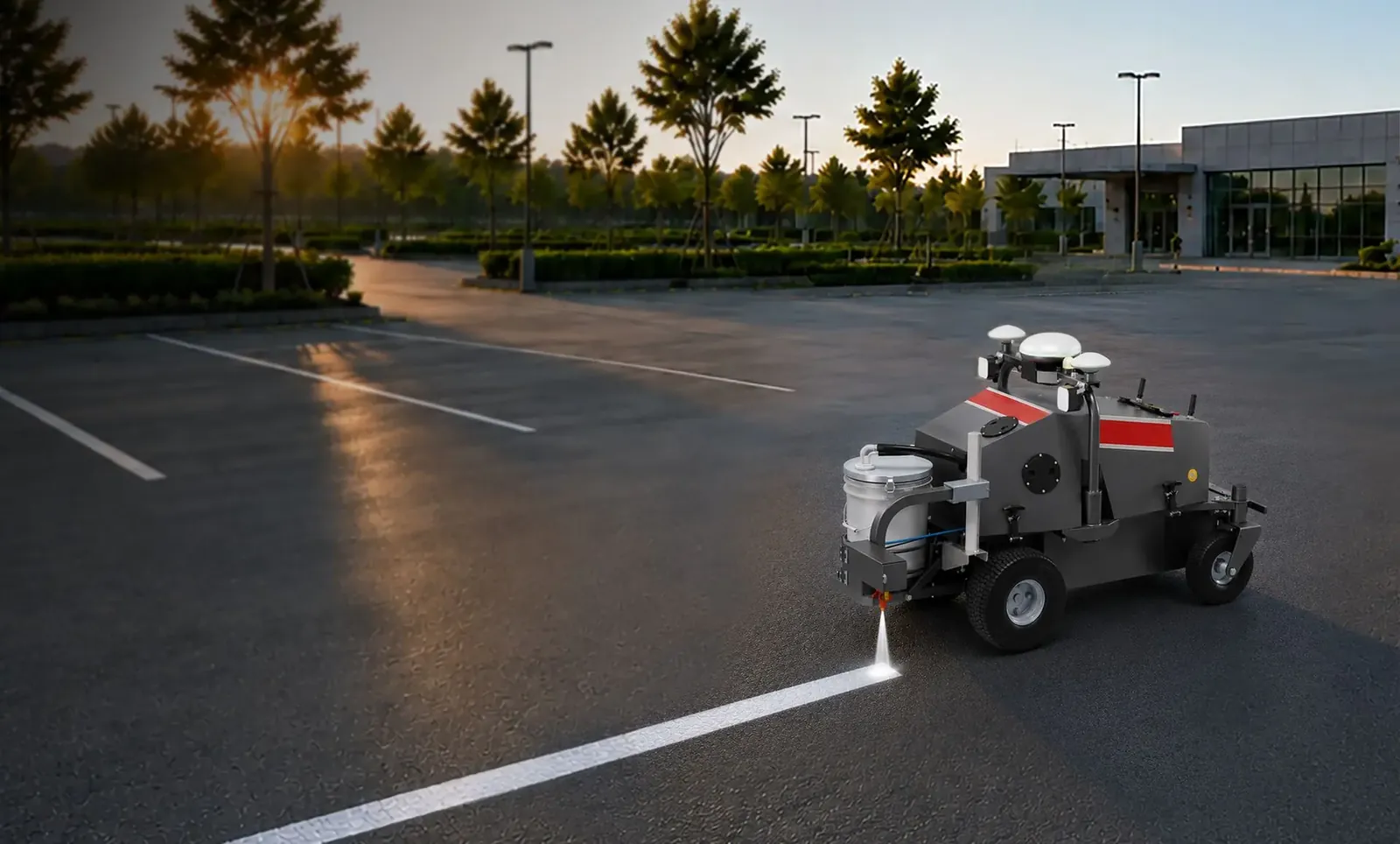
Marking car parks with a robot: new layouts and repainting
How a line marking robot applies parking bays, arrows and pedestrian crossings on car parks and business parks, and why it is faster and sharper.
Read articleReady for smarter grounds?
Request a free field audit or demo.